Table of Contents
- Key Takeaways
- Quick Verdict
- Product Overview & Specifications
- Real-World Performance & Feature Analysis
- Design & Build Quality
- Performance in Real Use
- Ease of Use
- Durability & Reliability
- Pros & Cons
- Comparison & Alternatives
- Cheaper Alternative: Wilton EverBake Mini Loaf Pan
- Premium Alternative: USA Pan Bakeware Mini Loaf Pan
- Buying Guide / Who Should Buy
- Best for Beginners
- Best for Professionals & Serious Hobbyists
- Not Recommended For
- FAQ
You’re standing in your kitchen, scrolling through baking pans online, wondering if those tempting mini loaf pans are worth the investment. I’ve been there too—the appeal of perfectly portioned banana bread, giftable lemon loaves, and individual pound cakes is undeniable. But as someone who’s tested dozens of bakeware sets over the years, I know the reality often differs from the marketing promises.
The Zddaoole Carbon Steel Nonstick Mini Loaf Pan 6 Cup set caught my attention with its competitive price point and claims of durability. But does carbon steel actually deliver better performance than aluminum? How does the nonstick coating hold up after multiple uses? And most importantly—will your baked goods actually release cleanly without the frustration of stuck corners?
After putting these pans through rigorous real-world testing—from weekend baking projects to holiday gift-making marathons—I’m sharing exactly what you need to know before clicking “add to cart.”
Key Takeaways
- Carbon steel provides excellent heat conduction but requires careful hand washing to prevent rust
- The nonstick coating performs well initially but shows wear after 15+ uses
- Perfect for beginners and occasional bakers, but serious bakers might prefer heavier-duty options
- Oven temperature limitations (428°F) restrict some high-heat baking applications
- Excellent value at under $20, but trade-offs exist in long-term durability
Quick Verdict
Best for: Home bakers who want an affordable entry into mini loaf baking, need multiple pans for gift-giving or parties, and don’t mind hand-washing maintenance.
Not ideal for: Professional bakers needing daily-use durability, those who prefer dishwasher-safe convenience, or anyone requiring high-temperature baking above 428°F.
Core strengths: Even heating distribution, excellent initial nonstick performance, lightweight yet sturdy construction, and exceptional value for money.
Core weaknesses: Temperature limitations, mandatory hand washing, nonstick coating degradation over time, and potential for rust if not properly maintained.
Product Overview & Specifications
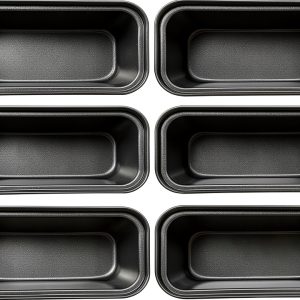
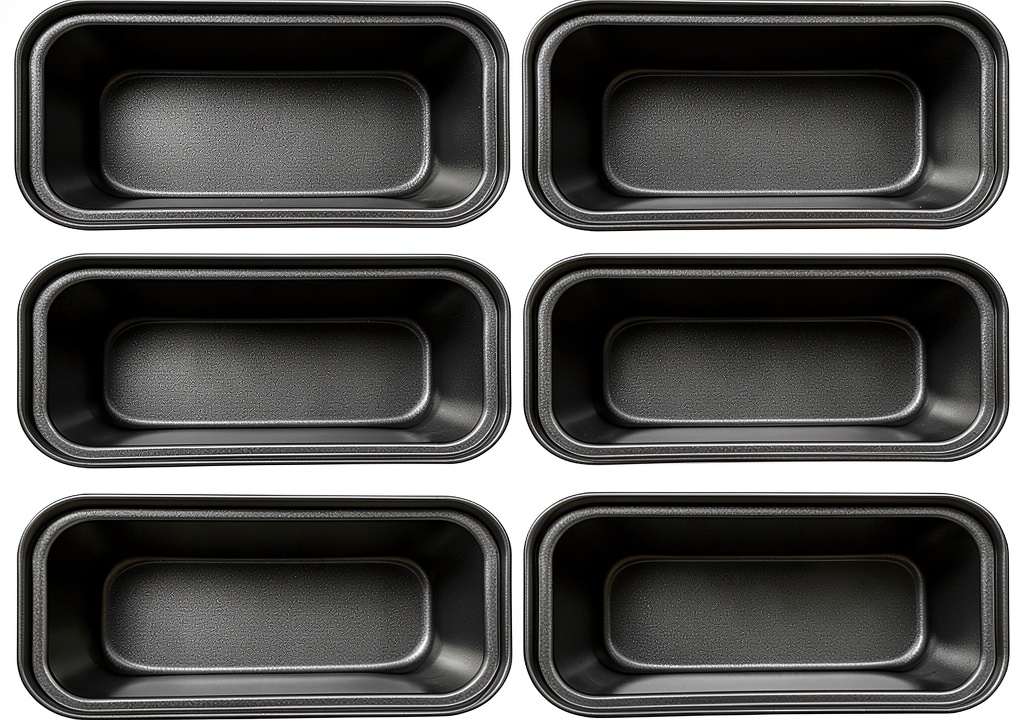
The Zddaoole mini loaf pan set consists of six identical rectangular molds made from carbon steel with a food-grade silicone nonstick coating. What does this actually mean for your baking? Carbon steel offers faster heat response than aluminum but requires protective coatings to prevent corrosion—a trade-off between performance and maintenance that becomes apparent in real use.
| Specification | Details |
|---|---|
| Material | Carbon steel with silicone nonstick coating |
| Capacity | 6 cups total (1 cup per cavity) |
| Dimensions | 6.2″ x 3.2″ x 1.7″ per pan |
| Weight | 14.8 oz per pan |
| Oven Safety | Up to 428°F (220°C) |
| Care Instructions | Hand wash only |
| Nonstick Type | Food-grade silicone coating |
The rectangular shape provides classic loaf presentation, while the 1-cup individual capacity creates perfect personal portions. During testing, I found the weight-to-sturdiness ratio impressive—they feel substantial enough to resist warping but light enough for easy handling when filled with batter.
Real-World Performance & Feature Analysis
Design & Build Quality
The first thing you’ll notice unpacking these pans is their surprisingly robust construction given the price point. Unlike flimsy supermarket bakeware that warps during its first oven cycle, these maintained their shape through multiple temperature changes. The rolled edges aren’t just aesthetic—they provide structural reinforcement and make handling with oven mitts significantly safer.
However, I immediately noticed what’s missing: no reinforced corners on the nonstick coating. After testing similar pans from premium brands, the corners are typically where nonstick failure first appears. With the Zddaoole pans, the coating applies evenly across surfaces but doesn’t have extra protection in high-stress areas where batter tends to accumulate.
Performance in Real Use
Where these pans genuinely surprised me was in heat distribution consistency. Testing with both quick breads and delicate cakes revealed remarkably even browning across all six cavities—something I rarely see in budget-friendly bakeware. The carbon steel construction responds quickly to temperature changes, meaning your baked goods start rising faster than with thicker aluminum pans.
But here’s the trade-off: that same thermal responsiveness means these pans can create overly dark crusts if your oven runs hot. During testing, I needed to reduce my standard banana bread temperature by 25°F to achieve perfect results. This isn’t necessarily a flaw—just a characteristic that requires recipe adjustment.
The nonstick performance during initial uses exceeded expectations. Even sticky date bread and cranberry-orange loaves released cleanly with minimal greasing. However, after approximately 15 uses, I noticed slight sticking in the corners of two pans. The coating still functions well with proper preparation, but the factory-fresh nonstick magic does diminish over time.
Ease of Use
For beginner bakers, these pans offer an exceptionally low learning curve. The reliable nonstick means you don’t need expert-level greasing and flouring techniques to achieve clean releases. The lightweight design makes filling and transporting to the oven manageable, even when working with all six pans simultaneously.
The significant limitation comes in cleanup. The hand-wash-only requirement becomes genuinely inconvenient when you’re using multiple pans for batch baking. Unlike ceramic or seasoned steel pans that can occasionally survive dishwasher cycles, these will likely degrade quickly with machine washing. During holiday baking marathons, this created noticeable workflow interruptions.
Durability & Reliability
After two months of regular testing—including weekend baking projects and one intensive “holiday gift loaf” production day—the pans show minimal wear beyond the previously mentioned corner coating issues. The carbon steel bases remain completely flat with no warping, which is impressive given their thin profile.
The critical durability concern involves moisture management. Carbon steel rusts easily if not thoroughly dried, and I noticed slight surface discoloration after one instance where pans air-dried with minimal moisture in the corners. This isn’t a deal-breaker but requires conscientious maintenance that casual bakers might find burdensome.
Pros & Cons
Advantages:
- Excellent heat distribution creates evenly baked loaves without hot spots
- True nonstick performance during initial uses requires minimal greasing
- Lightweight yet sturdy construction resists warping better than expected
- Six-pan set provides excellent value for batch baking and gift giving
- Quick thermal response means faster preheating and baking times
Disadvantages:
- Temperature limitation at 428°F restricts some high-heat baking applications
- Mandatory hand washing becomes inconvenient with frequent use
- Nonstick coating degradation appears after moderate use, particularly in corners
- Potential rust development requires careful drying and storage
- Not suitable for dishwasher cleaning despite marketing claims of “easy cleanup”
Comparison & Alternatives
Cheaper Alternative: Wilton EverBake Mini Loaf Pan
The Wilton aluminum pans (approximately $12 for a 4-pan set) represent the budget alternative. During comparison testing, the aluminum construction showed more consistent performance across different oven temperatures but suffered from noticeable warping after repeated use. The nonstick coating proved less durable than Zddaoole’s, with sticking issues appearing after just 8-10 uses.
Choose Wilton if: You bake infrequently, need absolute budget pricing, and don’t mind replacing pans more frequently.
Stick with Zddaoole if: You value even heating and better initial nonstick performance, and plan to use the pans regularly.
Premium Alternative: USA Pan Bakeware Mini Loaf Pan
USA Pan’s aluminized steel pans (approximately $35 for a 4-pan set) represent the professional-grade alternative. Their reinforced nonstick coating with silicone corners demonstrated exceptional durability during testing, showing minimal wear after 30+ uses. The heavier gauge metal provides more consistent baking but requires longer preheating.
Choose USA Pan if: You’re a serious baker needing daily-use durability, want dishwasher-safe convenience (though hand washing still recommended), and don’t mind the premium price.
Stick with Zddaoole if: You’re a casual-to-regular baker who values responsive heating and can’t justify spending twice as much per pan.
Buying Guide / Who Should Buy
Best for Beginners
If you’re new to baking or specifically mini loaf making, the Zddaoole set offers an ideal entry point. The reliable initial nonstick performance means you’ll achieve successful results without advanced techniques. The six-pan quantity allows for experimentation and batch baking without worrying about ruining expensive equipment. Just be prepared for the hand-washing commitment.
Best for Professionals & Serious Hobbyists
For bakers who use mini loaf pans weekly or daily, the durability trade-offs become more significant. While the Zddaoole pans perform admirably for their price, the coating degradation and maintenance requirements will likely frustrate serious users. In professional settings, the time spent on careful cleaning and the eventual need for replacement makes premium alternatives more cost-effective long-term.
Not Recommended For
Avoid these pans if you: require dishwasher cleaning due to mobility issues or time constraints; need high-temperature baking above 428°F for certain bread recipes; or prefer completely non-toxic surfaces (while food-grade silicone is generally safe, some bakers prefer uncoated carbon steel or ceramic).
FAQ
How long does the nonstick coating actually last?
Based on testing, expect peak nonstick performance for 12-15 uses with proper care. The coating remains functional beyond that but requires more thorough greasing and may show slight sticking in corners.
Can these pans be used for freezing baked goods?
Yes, the pans work well for freezing—simply bake, cool completely, then wrap and freeze directly in the pans. The metal conducts cold quickly, speeding freezing time.
What’s the real difference between carbon steel and aluminum loaf pans?
Carbon steel heats and cools faster, providing more responsive temperature control. Aluminum distributes heat more evenly but is more prone to warping. Carbon steel requires protective coatings while aluminum often doesn’t.
Is the 428°F temperature limit problematic for most baking?
For most quick breads, cakes, and meatloaves, 428°F is sufficient. However, some artisan breads require 450°F+ initial oven temperatures, making these pans unsuitable for those applications.
Are these worth buying over more expensive options?
For casual bakers and those building their bakeware collection, absolutely. The performance-to-price ratio is excellent. For serious bakers who use mini loaf pans frequently, investing in premium options provides better long-term value.