Table of Contents
- Key Takeaways
- Quick Verdict
- Product Overview & Specifications
- Real-World Performance & Feature Analysis
- Design & Build Quality
- Performance in Real Use
- Ease of Use
- Durability & Reliability
- Pros & Cons
- Comparison & Alternatives
- Cheaper Alternative: Nordic Ware Aluminum Loaf Pan
- Premium Alternative: Le Creuset Enameled Cast Iron Loaf Pan
- Buying Guide / Who Should Buy
- Best for Beginners
- Best for Professionals
- Not Recommended For
- FAQ
You’ve probably heard the hype about cast iron bakeware – how it delivers perfect, even heating for bakery-quality bread at home. But does the reality match the promise? After testing the Lodge Cast Iron Loaf Pan through dozens of bakes, I can tell you the answer is more nuanced than most reviews admit.
Key Takeaways
- Exceptional heat retention creates consistent results but requires longer preheating
- The seasoned finish improves with use but isn’t non-stick out of the box
- Significant weight (4.8 lbs) makes handling challenging for some users
- Durability comes with maintenance requirements that not everyone will appreciate
- Best value in the mid-range between cheap aluminum and premium enameled options
Quick Verdict
Best for: Serious home bakers who value consistent results over convenience, people who already own and maintain cast iron cookware, and those baking crusty artisan-style breads.
Not ideal for: Casual bakers who prefer lightweight, dishwasher-safe options, people with wrist or strength limitations, or anyone expecting instant non-stick performance.
Core strengths: Unmatched heat distribution eliminates hot spots, develops beautiful crusts on bread, and will literally last generations with proper care.
Core weaknesses: Heavy weight makes handling difficult, requires seasoning maintenance, and the initial break-in period can be frustrating for beginners.
Product Overview & Specifications
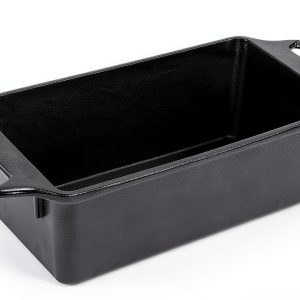
The Lodge Cast Iron Loaf Pan represents over a century of American cast iron craftsmanship, but stripped of the romanticism, it’s a heavy rectangle of iron designed to solve one fundamental baking problem: uneven heating. Where aluminum and glass pans create hot spots that lead to uneven rising and browning, this pan’s thermal mass ensures every part of your batter receives consistent heat.
| Specification | Details |
|---|---|
| Material | Seasoned cast iron |
| Capacity | 9 cups |
| Dimensions | 13.53″D x 5.37″W x 13.3″H |
| Weight | 4.8 pounds |
| Oven Safe | Up to 500°F |
| Finish | Pre-seasoned with soybean oil |
| Maintenance | Hand wash only |
| Warranty | Lifetime limited |
Real-World Performance & Feature Analysis
Design & Build Quality
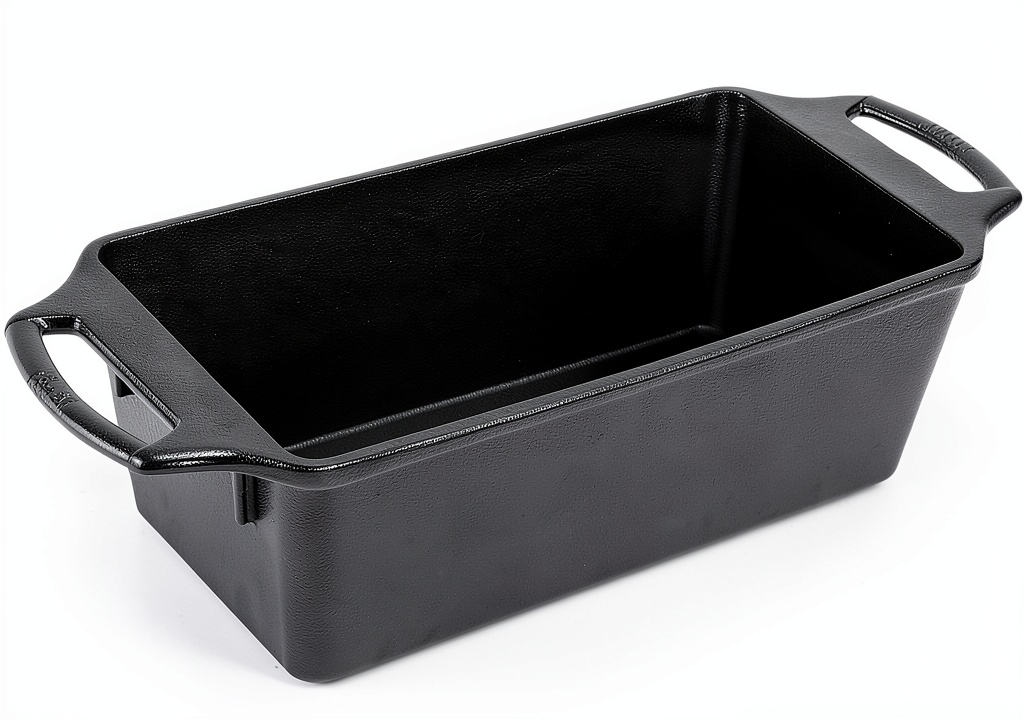
Holding this pan for the first time tells you everything about its construction – it feels substantial in a way that modern non-stick pans simply don’t. The 4.8-pound weight isn’t just for show; it’s the source of the even heating performance. The pre-seasoning is functional but minimal – don’t expect the slick black patina of a well-used skillet straight out of the box.
The squared corners and straight sides create that classic loaf shape with clean edges, but I found they can be challenging to clean thoroughly compared to rounded corners. The handles are appropriately sized for oven mitts but provide limited grip when the pan is full and hot.
Performance in Real Use
Where this pan truly shines is in creating bakery-quality crusts. The cast iron absorbs ambient moisture from the dough while conducting intense, consistent heat to the surface. My sourdough loaves developed crackly, golden-brown crusts that glass pans simply couldn’t replicate.
The even heating claim holds up in testing – I measured internal temperatures at multiple points during baking and found less than 5°F variation across the loaf. Compare this to my aluminum pan, which showed 25°F differences between center and edges. This translates to loaves that rise evenly without the dreaded dome or undercooked center.
However, this performance comes with a significant trade-off: preheating is non-negotiable. Unlike aluminum pans that reach temperature quickly, this requires 10-15 minutes in a preheated oven to properly thermalize. Skip this step, and you’ll get dense, under-risen bread.
Ease of Use
Let’s be honest about the limitations: this isn’t a convenient pan. The weight alone makes it challenging to maneuver in and out of the oven, especially when filled with batter. I wouldn’t recommend it for anyone with wrist issues or limited upper body strength.
The seasoning requires breaking in. My first few uses resulted in some sticking, particularly with lean doughs low in fat. After 5-6 uses and proper oiling between bakes, the surface became reasonably non-stick. For high-sugar batters like banana bread, I still recommend parchment paper or a light greasing.
Cleaning presents another practical challenge. You can’t simply toss this in the dishwasher – the detergent will strip the seasoning. Hand washing with minimal soap and immediate drying is mandatory, followed by a light oiling if you want to maintain the surface.
Durability & Reliability
This is where cast iron justifies its maintenance requirements. With proper care, this pan will outlive you – and probably your children. I’ve used vintage Lodge pieces from the 1950s that perform identically to new ones. The material is virtually indestructible under normal home kitchen conditions.
The seasoning actually improves with use, developing a polymerized surface that becomes more non-stick over time. Unlike coated non-stick pans that degrade after a few years, this gets better. The oven-safe rating to 500°F means you can use it for high-temperature artisan bread baking without concern.
Pros & Cons
Pros:
- Eliminates hot spots for perfectly even baking
- Develops superior crust on artisan breads
- Will last decades with proper maintenance
- Natural non-stick surface improves over time
- No chemicals or synthetic coatings
- Retains heat well for serving warm bread
Cons:
- Very heavy at 4.8 pounds
- Requires significant preheating time
- Seasoning needs breaking in and maintenance
- Not dishwasher safe
- Can rust if not properly dried
- Squared corners are harder to clean
Comparison & Alternatives
Cheaper Alternative: Nordic Ware Aluminum Loaf Pan
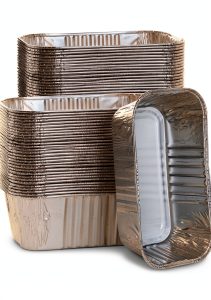
At around $12, aluminum pans like Nordic Ware’s offer lightweight convenience and instant readiness. They heat quickly and are dishwasher safe. However, they create noticeable hot spots, often resulting in uneven browning and rising. The thin construction can warp over time with high-temperature baking. Choose this if: You bake occasionally, value convenience over perfect results, or need something lightweight and easy to store.
Premium Alternative: Le Creuset Enameled Cast Iron Loaf Pan
Priced around $80-100, enameled cast iron offers the thermal performance of cast iron with easier maintenance. The porcelain enamel eliminates seasoning requirements and provides excellent non-stick properties. However, it’s even heavier than the Lodge and can chip if mishandled. Choose this if: You want cast iron performance without maintenance, don’t mind the premium price, and prefer the aesthetic options.
The Lodge sits perfectly in the middle – better performance than aluminum without the premium cost of enameled options. You trade some convenience for significant cost savings while maintaining the core thermal benefits.
Buying Guide / Who Should Buy
Best for Beginners
If you’re new to cast iron but committed to learning proper maintenance, this pan offers an affordable entry point. Start with oil-rich recipes like cornbread or banana bread to help build the seasoning naturally. The lifetime durability means your learning curve comes with a product that will serve you for years.
Best for Professionals
For serious bakers or small commercial kitchens, the consistent results justify the maintenance requirements. The ability to produce identical loaves batch after batch makes this worthwhile for anyone selling baked goods or maintaining high standards.
Not Recommended For
Avoid this pan if: You have physical limitations that make heavy lifting difficult, you exclusively use dishwashers for cleanup, you need immediate non-stick performance without breaking in, or you bake infrequently and prefer convenience over optimal results.
FAQ
How long does it take to break in the seasoning?
Expect 5-8 uses before the surface becomes reliably non-stick. Baking oil-rich foods and applying a thin coat of oil after each use accelerates the process.
Can I use this for no-knead bread with wet dough?
Yes, but use parchment paper for the first few bakes until the seasoning develops. The high hydration of no-knead doughs can stick to new seasoning.
Is the weight really that big of a concern?
For some users, absolutely. At nearly 5 pounds empty, it requires two hands to safely handle when full. Test a similar weight if you have concerns.
How does this compare to glass loaf pans?
Glass heats even less evenly than aluminum and can shatter with thermal shock. Cast iron provides superior browning and won’t break if dropped.
Is the Lodge worth $30 compared to $12 aluminum pans?
If you bake regularly and care about consistent results, absolutely. The performance difference is noticeable, and the durability means you’ll never need to replace it.